Development of Human Capital Infrastructure (Health and Productivity Management, Corporate Empathy)
Development of human capital infrastructure
The TOKAI Group believe that two factors are important in its infrastructure for the realization of the "Risou no ko" (ideal individual) and the "Risou no soshiki" (ideal organization): "(1) Promoting and enabling employees to maintain good health" and "(2) Initiatives to instill the Group's policies so that employees share them." We will press ahead with initiatives to realize them by developing and strengthening this human capital infrastructure.
(1) Promoting and enabling employees to maintain good health
A state in which individual employees are able to continue to work with enthusiasm in good physical and mental health will drive the sustainable growth of the Group. Accordingly, we will promote health and productivity management, encourage each individual employee to increase their awareness of health and establish an environment that will enable them to continue to work in sound physical and mental health.
(2) Initiatives to instill the Group's policies and enable employees to share them
We believe that instilling the Group's policies and enabling employees to share them is an important factor in the development of unity within the organization, and it leads to employees working together to move in the same direction. We will instill the policies and encourage employees to share them by communicating messages from management and enhancing opportunities to engage in dialogue.
| The Group's Important KPI (by fiscal year) |
Results | Targets | ||||||
|---|---|---|---|---|---|---|---|---|
| 2022 | 2023 | 2024 | 2025 | 2028 | 2030 | |||
| KPIs related to Internal Environment Development Policy | Particularly important KPI | (5) Ratio of health literate employees | 68.1% | 70.4% | 77.9% | 79.6% | 83.0% | 85.0% |
| (6) Corporate Empathy Indicator | - | - | - | - | 65.0% | 68.0% | ||
Health and Productivity Management
TOKAI group follows a human capital management policy and aims to become a vibrant and energetic corporate group by implementing a human capital strategy (ideal individuals, ideal organization) to enhance employee well-being. We are committed to achieving the realization of "ideal individuals" and "ideal organization" through initiatives such as "support for autonomous career development," "workstyle reform," "cultivating an organizational culture that values diversity," and "health management measures." In terms of health management, we strive to improve productivity and well-being in order to achieve the goals set in our mid-term management plan for 2028 [PDF:3.01MB].
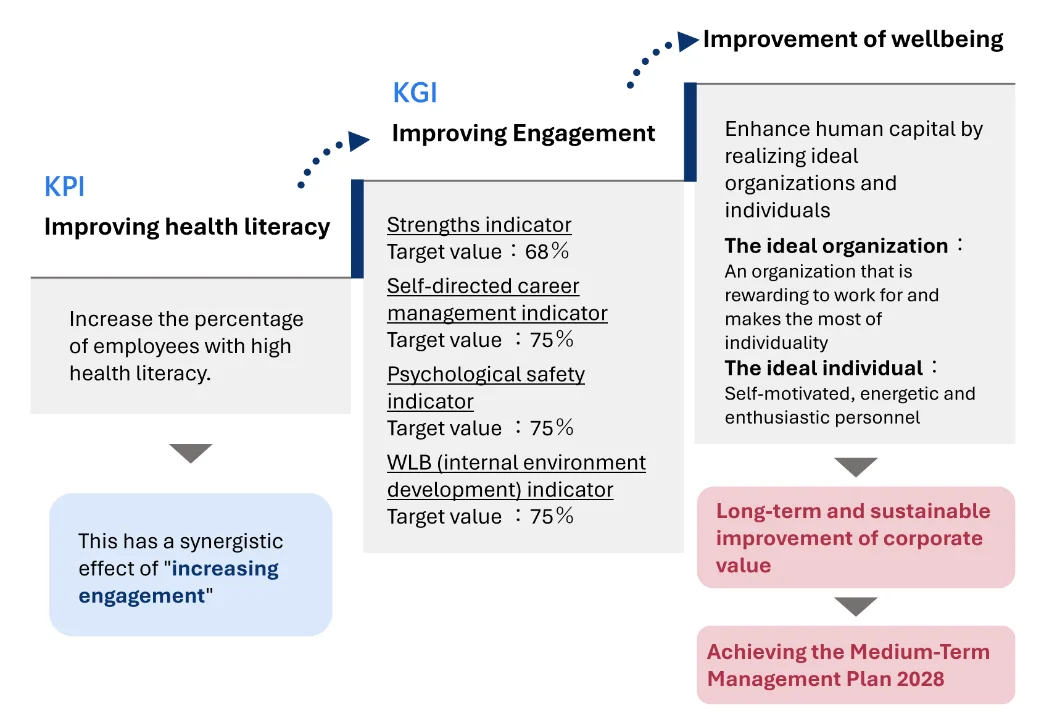
Expected Effects of Health Management Practices
- 1Improvement in employees' health literacy.
- 2Reduction in the number of absences per thousand employees.
- 3Reduction in presenteeism (a state of reduced work efficiency).
The impact of improved health literacy is wide-ranging, making it a key indicator for health management.
| Indicators | 2023 | 2024 | 2025 | 2026 Targets | |
|---|---|---|---|---|---|
| Percentage of employees with high health literacy. | 70.4% | 77.9% | 79.6% | 81% | |
| Absenteeism rate (number of absences per thousand employees)ases. | Physical | 15.9 cases | 21.9 cases | 15.9 cases | 15.0 cases |
| Mental | 15.1 cases | 11.9 cases | 12.6 cases | 10.0 cases | |
| Presenteeism: Measurement method, number of participants, response rate. | 76.3% | 76.2% | 75.8% | 77.0% | |
Evaluation:
Through our health management initiatives, the percentage of employees with high health literacy has reached 79% in the fiscal year 2025. According to our group's analysis, employees with high health literacy demonstrate approximately 1.5 times higher job performance compared to those with lower health literacy. Additionally, regarding the number of absences per thousand employees, the number of mental health issues increased, but the number of physical health issues has been trending downward.
Based on these findings, we believe that the improvement in these two key indicators has contributed to the enhancement of productivity within the company. We will continue to strive for further improvement and enhancement of health literacy and other related factors.
| Health Issues and Key Themes: | Numerical Targets for Issue Improvement: |
|---|---|
|
|
|
|
|
|
|
|
Health Management Efforts
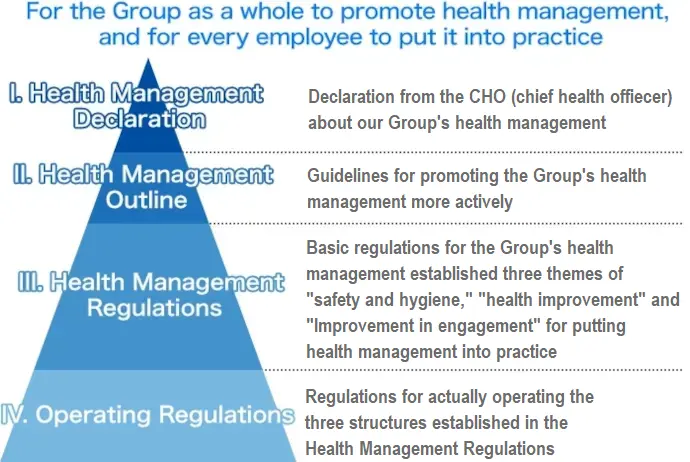
Declaration of TOKAI Group Health Management
We regard the employee's health as an important property for our group and society, so TOKAI group supports the health promotion activity of the employee proactively and through this we achieve our corporate philosophy " To improve the lives of our customers, we will continue to grow and develop together with local communities and the earth".
Katsuo Oguri
President & CEO & CHO(Chief Health Officer)
TOKAI Group Health Management Charter
In order for us to take a leading role in further advancing the Group's health management activities, we have recently established our "TOKAI Group Health Management Charter" which is formed around the three main points of "health promotion", "safety and hygiene", and "Improving Engagement".
- 1We will develop employees who are healthy in mind and body and who can practice the TOKAI-WAY.
- 2In order to plan and carry out the principle of "health management", we will organize individual committees to implement "Group Health Management", "Group Safety and Hygiene", and "Group Improving Engagement".
- 3By actively supporting the promotion of employee health, we will strive to create workplace environments where all employees are in good health and can perform their work with high energy and enthusiasm.
- 4While always being aware of the concept that “Safety and health lay the foundation of management”, we will follow laws, ordinances, and internal standards related to safety and hygiene, and will facilitate the creation of safe, secure, and comfortable workplaces.
- 5We will assist in arranging comfortable work conditions for employees, so that they can achieve a work-life balance allowing the fulfillment of work responsibilities to be in harmony with home and community life.
- 6Our employees will declare their commitment to engaging in healthy activities and take responsibility for managing and maintaining their own health.
- 7We will invest in appropriate management resources and conduct effective improvements on an ongoing basis for the execution of health management.
- 8We are committed to maintaining and promoting the good health of people in local communities and society to help build a healthy society.
Social Value and Corporate Value
Social Value
We contribute to the realization of a society where everyone can experience "peace of mind, safety, convenience, comfort, joy, and fulfillment" by actively engaging in solving social issues, including environmental challenges, and supporting the growth of future generations with dreams.
Corporate Value
We consider the health of our employees as a valuable asset for our group and society. By actively supporting activities to enhance employee health, we continue to grow and develop for the sake of our customers' lives, along with the community and the planet.
Health Management Promotion System
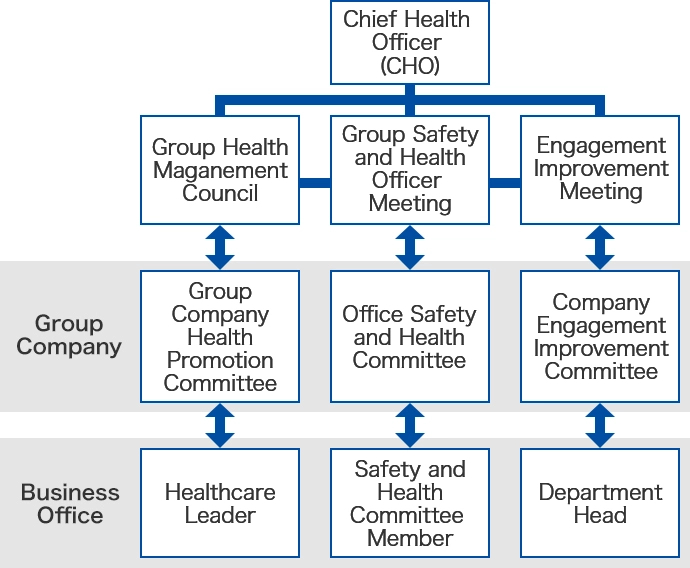
The top management has assumed the role of Chief Health Officer (CHO) and is working on health management from the top down. To promote health management, we have established the Group Health Management Conference, the Group Safety and Health Officers Conference, and the Engagement Improvement Conference.
At the Group Health Management Conference, which promotes health enhancement across the group, we share information and hold discussions with the health insurance association and labor unions, among others, to review health management measures and consider future initiatives. The Group Health Management Conference is held three times a year, where we implement the management cycle (PDCA) to check the progress and achievement of goals and make necessary revisions.
Additionally, the Health Promotion Committees of each group company collaborate with the committees and healthcare leaders at each business location to ensure that the goals and measures related to health management are disseminated throughout the entire group.
Specific Initiatives for Health Management
We continuously support efforts to improve the health consciousness of our employees and address their health issues by providing initiatives for health promotion and continuous provision of health information.
Introduction of Initiatives for Maintaining and Enhancing Employee Health
We introduce past initiatives, achievements, and future plans.
To improve health literacy, we conduct online training and events focusing on exercise, diet, and sleep.
Initiatives for Fiscal Year 2025
- Implementation of walking events (investment amount: 7,587 thousand yen)
July: 1,923 participants (399 employees)
August: 1,937 participants (401 employees)
September: 1,932 participants (396 employees)
October: 1,938 participants (395 employees)
November: 1,911 participants (399 employees)
December: 1,899 participants (394 employees)
January: 1,868 participants (391 employees)(Number of participants from employee families in parentheses)
- Conducting online training on exercise, diet, and sleep
- Encouraging employees to obtain the Japan Health Master certification
- Supporting health management for business partners (Introducing the health seminar)
Initiatives planned for Fiscal Year 2026
- Implementation of walking events
- Conducting online training on exercise, diet, and sleep
- Conducting an online training session on arteriosclerosis
- Encouraging and conducting seminars for obtaining the Japan Health Master certification
- Organizing health measurement and exercise events
- Notifying the results of health literacy assessments
To reduce the number of individuals affected by cerebrovascular and cardiovascular diseases, we focus on high-risk individuals and implement approaches to suppress the onset of these diseases.
Initiatives for Fiscal Year 2025
- Thorough encouragement for medical consultation for individuals requiring follow-up after regular health check-ups.
- Alert for individuals at risk of progressing arteriosclerosis.
- Expanding the implementation of health guidance.
(Target: 21 individuals, Implemented: 16 individuals, Completion of guidance: 100%)
- Providing company subsidies for comprehensive health check-ups (for dependents under the health insurance association).
- Encouraging individuals eligible for brain check-ups to undergo brain check-ups by providing subsidies.
Initiatives planned for Fiscal Year 2026
- Thoroughly promote follow-up examinations for individuals identified as requiring further examination after regular health check-ups.
- Alert for individuals at risk of progressing arteriosclerosis.
- Expand the implementation of health guidance.
- Lowering the eligible age for company subsidies for comprehensive health check-ups and increasing the amount of the subsidies (for dependents under the health insurance association)
- Provision of company subsidies for comprehensive medical check-ups (for dependents under the health insurance union)
- Encourage individuals eligible for brain check-ups to undergo brain check-ups by providing subsidies.
- Implementation of online training regarding arteriosclerosis
- Conducting seminars on understanding health check-up results, their significance, and important considerations.
- Conducting seminars on risks related to blood pressure, blood sugar, and lipids.
- Adding HbA1c (blood glucose testing) to the regular health check-up required test items
To prevent lifestyle diseases, we are working on strengthening our response to individuals identified as requiring further examination after regular health check-ups, implementing measures to address smoking, breakfast skipping, and excessive alcohol consumption.
Initiatives for Fiscal Year 2025
- Approach to Individuals Identified as Requiring Further Examination after Regular Health Check-ups:
-
- Thorough recommendation for follow-up examinations by Health Care Leaders and supervisors.
- Subsidies for the cost of retesting.
- Implementation of seminars on interpreting health check-up results and lifestyle improvement.
- Smoking Countermeasures:
-
- Sending smoking cessation awareness letters from Chief Health Officer (CHO).
(Targeted individuals: 399, Successful quitters: 138)
- Subsidies for smoking cessation treatment.
Online smoking cessation programs.
Outpatient smoking cessation programs.
- Smoking cessation through health guidance. (Targeted individuals: 15, Successful quitters: 7)
- Sending smoking cessation awareness letters from Chief Health Officer (CHO).
- Breakfast Skipping Countermeasures:
-
- Video education on breakfast (Viewed by 1,016 participants)
- Measures to prevent Excessive Drinking:
-
- Implementation of health guidance for excessive drinkers
- Implementation of video education on drinking
Initiatives planned for Fiscal Year 2026
- Response to individuals who need to undergo regular health check-ups:
-
- Thorough promotion of check-up recommendations by healthcare leaders and supervisors
- Subsidies for the cost of re-examinations
- Conducting seminars on understanding health check-up results and improving lifestyle habits.
- Smoking Cessation Measures:
-
- Sending smoking cessation awareness letters from CHO (Chief Health Officer)
- Implementation of smoking cessation measures tailored to each company
- Subsidies for smoking cessation treatments (online smoking cessation programs, outpatient smoking cessation programs, etc.)
- Provision of nicotine gum to those who wish to quit smoking
- Smoking cessation through health guidance
- Incentives for online smoking cessation program referrers
- Measures to address skipping breakfast:
-
- Implementation of video education about breakfast
- Provision of health information to residents of single and solo assignment dormitories
- Addressing blood sugar risks:
-
- Implementation of health guidance
- Encouragement to participate in walking events
- Implementation of online training on exercise, diet, sleep, and more
- Obesity prevention:
-
- Implementation of health guidance
- Encouragement to participate in walking events
- Implementation of online training on exercise, diet, sleep, and more
With the increasing number of staff members working remotely, we will strive to address the specific health challenges that arise during telework.
Initiatives for Fiscal Year 2025
- Encouragement to participate in walking events
- Implementation of health issue countermeasures tailored to each company
Initiatives planned for Fiscal Year 2026
- Encouragement to participate in walking events
- Implementation of health issue countermeasures tailored to each company
With the extension of retirement age to 65, there are higher expectations for the active participation of employees in their 60s. We are working on improving the health status and maintaining physical fitness of older adults (aged 60-65).
Initiatives for Fiscal Year 2025
- Recommending individuals eligible for company subsidies for brain check-ups to receive brain check-ups
- Providing information and video education seminars for older adults (viewed by 1,109 participants)
- Encouragement to participate in walking events
Initiatives planned for Fiscal Year 2026
- Encouragement for brain check-ups for individuals eligible for brain check-up subsidies
- Providing information and conducting seminars for older adults
- Encouragement to participate in walking events
To promote measures for the prevention of mental health issues, we are conducting workplace improvement training based on the results of stress checks as part of our mental health initiatives. Additionally, we are systematically providing training for managers and employees, and utilizing external Employee Assistance Program (EAP) organizations.
Initiatives for Fiscal Year 2025
- Implementation of counseling and workplace improvement review meetings
- Implementation of self-care video education (3,398 participants; 81% participation rate)
- Implementation of line care video education (751 managers participated; 78% participation rate)
- Company-wide rollout of stress check organizational analysis
Initiatives planned for Fiscal Year 2026
- Implementation of counseling and workplace improvement review meetings
- Implementation of self-care video education
- Implementation of line care video education
- Seminars by specialized Employee Assistance Program (EAP) companies
- Company-wide rollout of stress check organizational analysis
- Interviewing of new employees with high stress levels
We are conducting screenings for the five major cancers (lung, colorectal, stomach, breast, and uterine) and promoting attendance for these screenings. For lung, colorectal, and stomach cancers, we ensure that they are included as mandatory items in regular health check-ups and encourage additional screenings.
Initiatives for Fiscal Year 2025
- Providing information on the Cancer Control Promotion Corporate Action "Recommendation for Cancer Screening"
Initiatives planned for Fiscal Year 2026
- Providing information on the Cancer Control Promotion Corporate Action "Recommendation for Cancer Screening"
We have high expectations for the active participation of female employees. We are working towards improving women's health conditions and enhancing the work environment. Specifically, for women-specific diseases such as breast cancer and cervical cancer, we encourage regular screenings by providing certain subsidies from the company.
Initiatives for Fiscal Year 2025
- Implementation of video education on diseases specific to women, viewed by 1,633 participants
- Video education on diseases specific to women for new managers, with 36 participants (59% participation rate)
- Subsidies for gynecological screenings (breast cancer and cervical cancer)
- Subsidies for bone density tests
Initiatives planned for Fiscal Year 2026
- Conducting seminars on diseases specific to women
- Video education on diseases specific to women for new managers
- Subsidies for gynecological screenings (breast cancer and cervical cancer)
- Subsidies for bone density tests
- Conducting preconception care seminars
To increase the number of employees with high health literacy, we continuously provide health information through our occupational health staff. Additionally, we encourage employees to obtain qualifications related to health and well-being.
Initiatives for Fiscal Year 2025
- Encouragement to take the Japan Health Master Examination (hosted by the Japan Health Promotion Association)
- 12th place in the ranking of the number of successful candidates by company for the Japan Health Master Certification [Kenken] (Total from the 1st to the 26th examination).
(Source: 'Ranking of successful candidates by company for the Japan Health Master Certification (1st to 26th examinations) announced! / Japan Master of Health Literacy Test Association') - Publication of health information in the company newsletter by occupational health staff
- Implementation of health awareness seminars for new managers
- Utilization of an app for relieving shoulder and back pain
- Provision of sleep apnea syndrome (SAS) screening services (20 participants)
- Subsidies for dental check-up costs
Initiatives planned for Fiscal Year 2026
- Encouragement to take the Japan Health Master Examination (hosted by the Japan Health Promotion Association) with examination fee subsidies for new managers, healthcare leaders, and new employees
- Publication of health information in the company newsletter by occupational health staff
- Implementation of health awareness seminars for new managers
- Conducting health and condition management seminars for new employees and career hires
- Utilization of an app for relieving shoulder and back pain
- Conducting seminars on headache and migraine countermeasures
- Conducting dental seminars
- Subsidies for dental check-up costs
The Results of Initiatives for Maintaining and Enhancing Health
Regarding Labor Safety and Health
Promotion system for labor safety and health
To promote safety and health, we have established a Group Safety and Health Officer Meeting, where we hold meetings three times a year with the overall safety and health managers of each workplace, labor health consultants, etc. We share information about safety and health, confirm the progress of initiatives, and discuss future measures.
In addition, at each workplace safety and health committee, we implement measures through the overall safety and health managers, safety managers, safety and health promoters, safety and health officers, occupational physicians, labor unions, etc. We follow the management cycle (PDCA) to promote the penetration of goals and initiatives.
Indicators for labor safety and health
| Performance for the fiscal year 2024 | Performance for the fiscal year 2025 | Performance for the fiscal year 2026 | |
|---|---|---|---|
| Work-related accidents | 46 cases (9.7 cases) |
47 cases (9.3 cases) |
15 cases (3.0 cases) |
| Commuting accidents | 10 cases (2.1 cases) |
8 cases (1.6 cases) |
5 cases (1.0 cases) |
| Total | 56 cases (11.8 cases) |
55 cases (10.9 cases) |
20 cases (4.0 cases) |
* (Rate per thousand people)
Key items for preventing work-related accidents
Based on past occurrence numbers and frequencies, we identify key items by identifying hazards as follows:
- Prevent work-related accidents caused by falls and slips
-
Initiatives:
- Provide safety training
- Ensure that safety gear (such as helmets to protect against fall injuries) is worn
- Act without making it necessary to rush
- Prevent Unsafe Actions
-
Initiatives:
- Create, review, and adhere to procedure manuals
- Ensure the pointing and calling method is used to confirm safety
- Affix safety awareness stickers and repeatedly say, "Work safely!"
- Use instruments and tools properly
- Promote Near-Miss Activities
-
Initiatives:
- Report near misses to people in charge of safety and health matters
- Share reports from each department at meetings of each individual committee
- Prevent Commuting and Traffic-Related Workplace Accidents
-
Initiatives:
- Allow ample time and maintain a calm mindset when commuting
- Drive proactively
- Come to a complete stop at stop signs and yield to pedestrians at crossings
- Maintain an appropriate distance between your car and the car in front of you
Results of Initiatives for Health Management
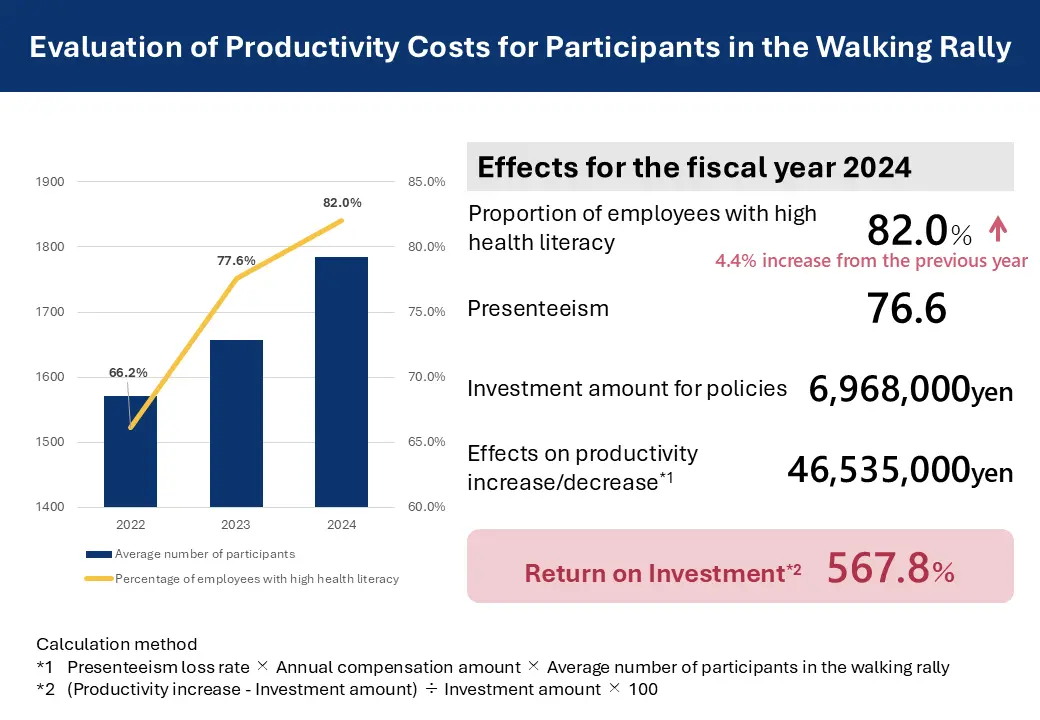
We are implementing initiatives primarily focused on exercise, diet, sleep, habits, stress management, and health check-ups to improve employees' health literacy. Improvement has been observed in the areas of exercise, diet, habits, and health check-ups.
Please refer to this link for the indicators, objectives, expected effects, and organizational chart of specific initiatives for our group's health management efforts.
| 2023 | 2024 | 2025 | ||
|---|---|---|---|---|
| Regular health check-up attendance rate | 100.0% | 100.0% | 100.0% | |
| Rate of individuals requiring follow-up after regular health check-ups (re-examination, detailed examination, further examination) who actually receive follow-up | 95.3% | 99.0% | 100% | |
| Smoking rate | 9.3% | 8.4% | 6.7% | |
| Number of participants in walking events | 1,658 | 1,785 | 1,915 | |
| Stress check implementation rate | 95.1% | 97.3% | - % | |
| Rate of paid leave utilization | 69.9% (Number of days taken: 12.1 days) |
72.3% (Number of days taken: 12.2 days) |
74.6% (Number of days taken: 12.5 days) |
|
| Percentage of employees who engage in exercise that makes them sweat for 30 minutes or more, at least twice a week, for over a year | 31.1% | 32.1% | 32.7% | |
| Frequency of skipping breakfast at least three times a week | 29.6% | 30.6% | 28.2% | |
| Frequency of having dinner within two hours before bedtime at least three times a week | 26.0% | 34.4% | 34.0% | |
| Percentage of employees whose work is affected by shoulder and neck pain | 19.2% | 19.6% | 18.5% | |
| Percentage of employees whose work is affected by eye fatigue | 24.8% | 25.8% | 25.2% | |
| Rate of maintaining appropriate weight (BMI) | 62.8% | 62.4% | 62.3% | |
| Proportion of normal blood sugar levels | 61.8% | 62.9% | 62.5% | |
| Average length of service | 15.5 years | 15.2 years | - years | |
| Per capita medical expenses (annually) | 301,000 yen | 284,000 yen | - yen | |
| Long-term absenteeism (due to personal injury or illness, continuous absence for five or more business days) Average number of days absent |
Physical | 50 days | 39 days | - days |
| Mental | 138 days | 144 days | - days | |
| Rate of individuals with high stress levels based on stress checks | 12.3% | 10.9% | - % | |
| Percentage of employees who feel a sense of fulfillment in their roles and job responsibilities | 79.0% | 80.8% | 80.6% | |
| Presence of fulfilling relationships in the family, workplace, and local community | 75.3% | 76.7% | 76.7% | |
| Work engagement | 72 | 74 | 73 | |
Evaluation:
While there have been many improvements in lifestyle habits, challenges remain in terms of work engagement. Since the start of our health management initiatives, the proportion of employees with high health literacy has been steadily increasing, and in the fiscal year 2025, the proportion of employees with high health literacy in their 20s to 50s increased compared to the previous year.
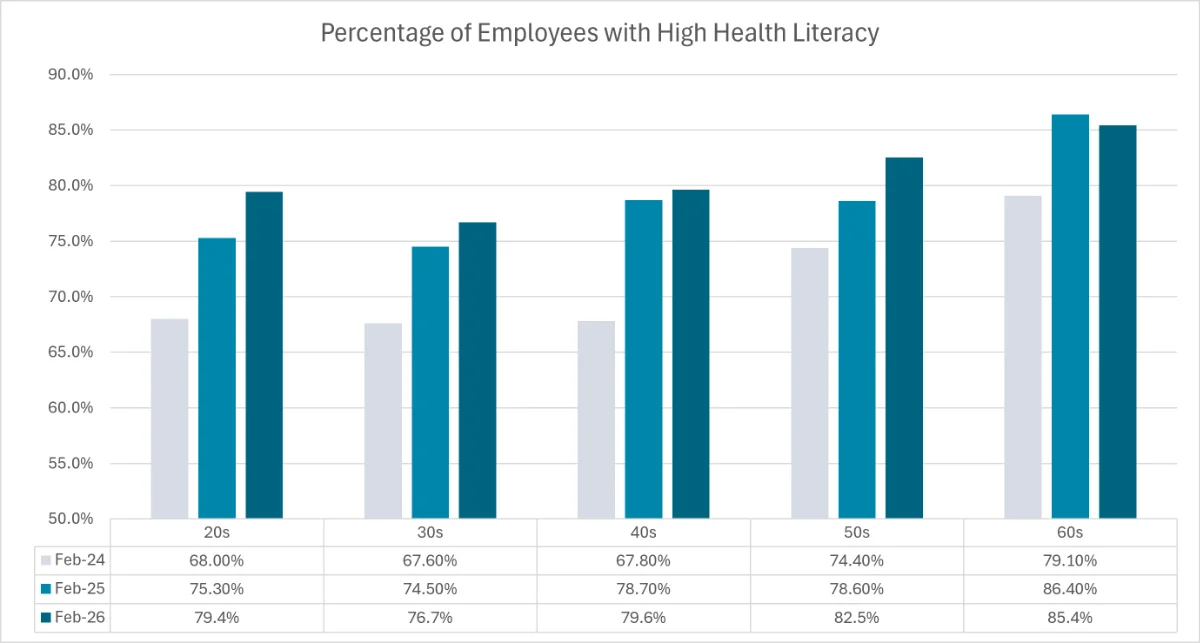
Furthermore, employees with high health literacy have the highest percentage in the work engagement evaluation indicators. It is believed that awareness of health positively influences work performance, and we will continue to focus on health management to maintain high values in both indicators.

Sessions to discuss the Corporate Message
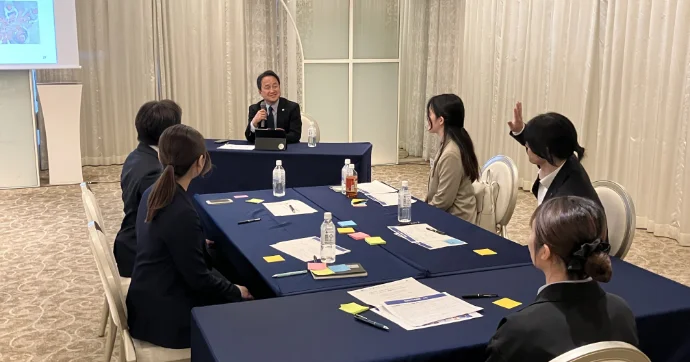
At the TOKAI Group, we hold sessions to discuss the Corporate Message in which the president and employees talk directly to each other. The purpose of these sessions is to instill the Corporate Message, which we formulated in the fiscal year 2024, and enable employees to espouse it.
This initiative includes the president explaining the background behind the formulation of the Corporate Message and the thinking that it reflects and exchanging opinions with employees during roundtable talks.
The sessions also include time for Q&A, and bidirectional communication is valued, so participants are encouraged to ask questions and exchange opinions without restrictions.
Through these initiatives, we increase employees' understanding of the Corporate Message and enable individual employees to espouse it, aiming to increase the sense of unity within the organization as a whole.
Ensuring evaluations reflect the practice of Corporate Message
We believe that putting the Corporate Message into practice, rather than just espousing it, is important.
Accordingly, we include the degree to which employees put the Corporate Message into practice in performance and ability evaluations, in addition to evaluating their everyday actions.
External Evaluation of Initiatives such as Health Management
Health and Productivity Stock Selection
We have been selected (for the second time) as a "Health and Productivity Stock Selection" jointly conducted by the Ministry of Economy, Trade and Industry and the Tokyo Stock Exchange. This selection evaluates and recognizes companies listed on the Tokyo Stock Exchange that strategically address employee health management from a business perspective.
Certified on March 9, 2022
The 2026 Certified KENKO Investment for Health Outstanding Organizations Recognition Program
We have been certified for the nineth consecutive year as a "Health Management Outstanding Corporation 2026 (Large Corporation Division) - White 500," jointly conducted by the Ministry of Economy, Trade and Industry and the Japan Health Council. Additionally, seven of our group companies have also been certified consecutively.
Certified in March 2026
Obtained "DBJ Health Management Rating"
TOKAI Corporation has obtained the highest rank in the "DBJ Health Management Rating" conducted by the Development Bank of Japan (DBJ) for three consecutive times.
Certified in April 21, 2021
Received "Governor's Award for Health Promotion Activities"
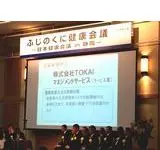
TOKAI Management Services Corporation, a shared service company of our group, has received the "Governor's Award for Health Promotion Activities" from Shizuoka Prefecture.
Awarded on February 19, 2018
Certified as "Platinum Kurumin" for Next-Generation Childcare Support
The TOKAI Group (consisting of TOKAI Holdings Corporation, TOKAI Communications Corporation, Tokai Gas Co., Ltd., TOKAI Cable Network Corporation, and TOKAI Management Services Corporation) has been certified and obtained the "Platinum Kurumin" designation from the Shizuoka Labor Bureau of the Ministry of Health, Labour and Welfare.